





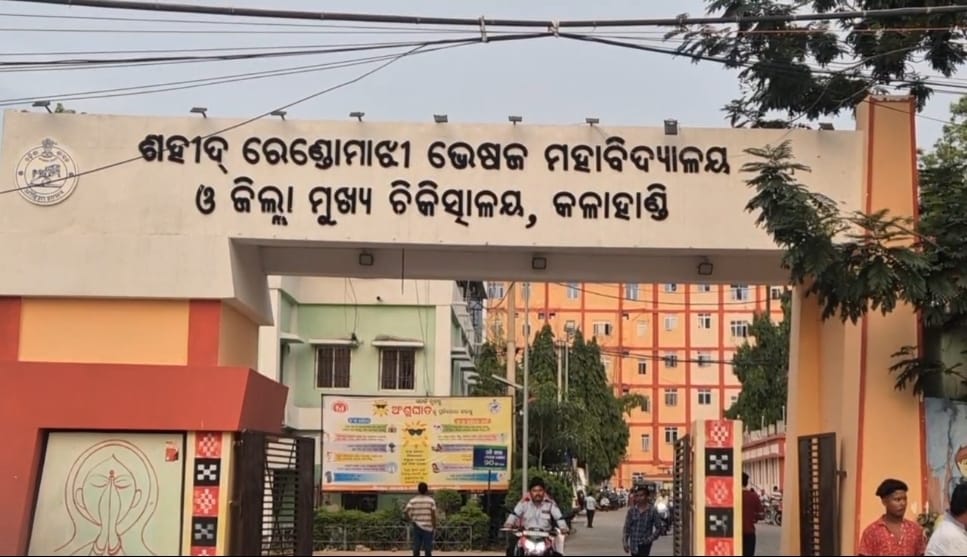
Kalahandi district, which has long been a hotbed of poverty, malnutrition, maternal and child mortality, malaria and health problems in remote areas, has seen a significant improvement in its health system over the past few years, despite the establishment of medical colleges, increase in the number of hospitals and development of infrastructure. Official data from the district shows that hundreds of posts ranging from doctors to nurses, laboratory technicians, radiographers and multi-disciplinary health workers are lying vacant, severely impacting the government health service.
Once a hotbed of malnutrition and malnutrition, Kalahandi has taken several development steps, but today the shortage of manpower in the health sector remains a major issue. The district has one medical college, one district head hospital, one sub-district hospital, 17 community health centres, 45 primary health centres, 241 sub-health centres, blood banks, dialysis units, AYUSH hospitals and other health institutions. But the human resources required to make this infrastructure effective are not available.
According to government statistics, out of 606 doctor posts sanctioned in the district, only 214 are working. That is, 392 posts or 65 percent are vacant. Similarly, 117 out of 356 nursing officer posts, 69 out of 105 laboratory technician posts, 22 out of 46 radiographer posts and 8 out of 13 eye assistant posts are vacant. As a result, patient care, testing, emergency treatment and specialist services are likely to be affected.
Not only permanent posts, the situation under the National Health Mission (NHM) is also worrying. Out of the total 2114 posts, 850 posts are vacant, i.e., about 40 percent of the posts are unstaffed. This may affect programs like vaccination, maternal and child health, nutrition, home health care and disease surveillance in rural areas.
According to health experts, human resources are as necessary as infrastructure development. Even if hospital buildings, modern equipment and new services are started, it is difficult to reach the full benefit of the system without adequate doctors, nurses and paramedical staff.
In such a situation, many questions have arisen in the minds of the people of the district. Why are two-thirds of the posts of doctors still vacant in districts where there are medical colleges? When will the shortage of health workers in rural areas end? What is the government’s time-bound plan to fill the posts that have been vacant for a long time? Why are health workers not being recruited in proportion to the increasing number of patients?
Kalahandi’s health history is one of struggle. While the district has made significant progress in the health sector over the past few decades, available official data shows that the shortage of human resources remains the biggest weakness. Unless these vacancies are filled soon, the expected benefits of expanding health infrastructure may not reach the general public fully. In this context, there are demands from various quarters to give equal emphasis not only to infrastructure but also to the rapid replenishment of human resources.